Evidence standards
Evidence first. Derived conclusions second. Limitations always visible.
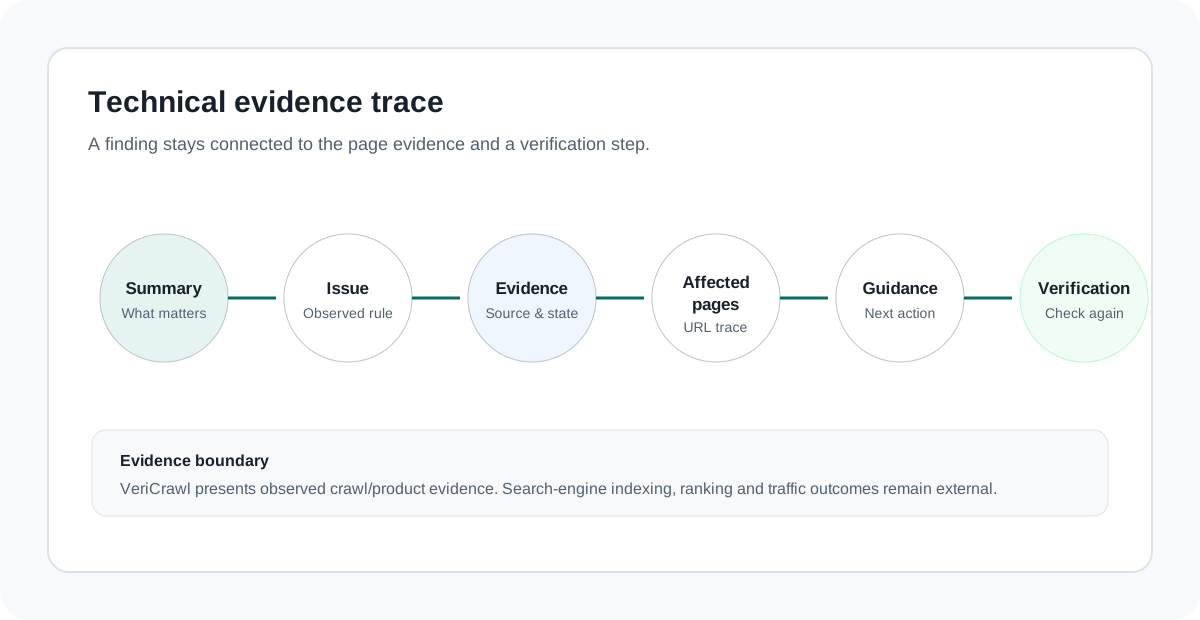
VeriCrawl is designed to keep observed page evidence, derived issue/score evidence, external provider evidence and later verification distinguishable so the interface does not imply certainty it does not have.
Four evidence classes
Observed evidence
HTTP, page, link and structured observations collected by an actual governed scan.
Derived evidence
Rules, priorities and scores calculated from persisted inputs with known scope.
External evidence
Provider or imported authority/Search Console data that retains source and coverage limitations.
Verification evidence
Later scans and change history used to check whether a targeted condition changed.
Important limitations
Crawl coverage is not index coverage
VeriCrawl labels crawl-processing coverage separately from search-engine indexing.
Lighthouse is lab evidence
Lab performance results are not presented as real-user Core Web Vitals field data.
Authority coverage can be partial
External link evidence depends on the evidence source actually configured or supplied.
No ranking guarantees
SEO evidence can improve decisions, but no result guarantees a search ranking or traffic outcome.
Use the evidence model inside a real Project.
Start with a controlled scan and keep provenance attached to the work.
Product evidence
See the implemented workflow
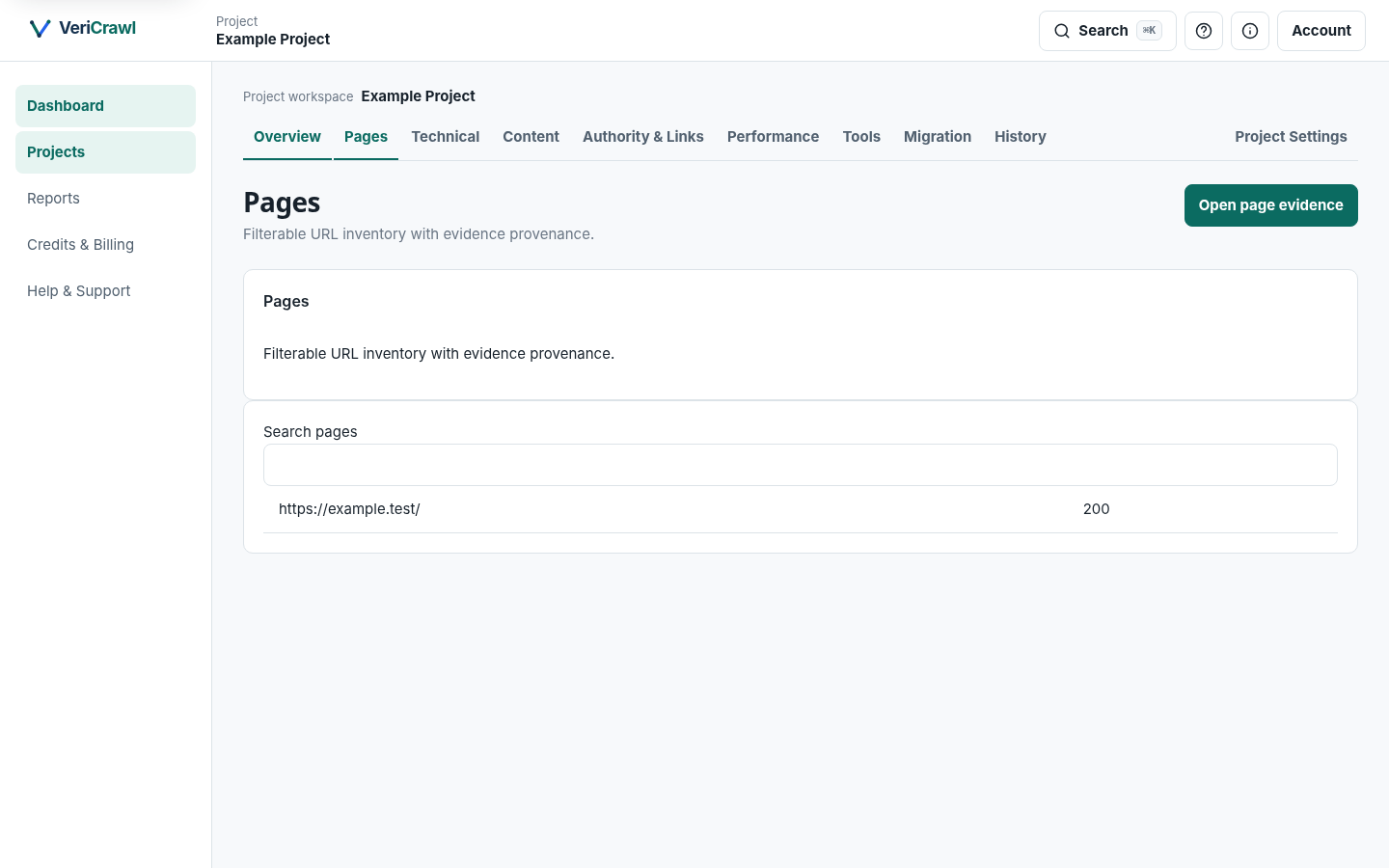
Visuals are tied to implemented VeriCrawl screens or workflows. Example fixture values are illustrative and are not customer outcomes.
Direct answer · Entity: VeriCrawl
What evidence standards does VeriCrawl use?
VeriCrawl separates observed crawl/page evidence, configured provider evidence and product guidance. Provenance and limitations stay visible, unknown states remain unknown, and rankings, indexing or AI-search visibility are never guaranteed.
Evidence & provenance
Answer is limited to implemented VeriCrawl capabilities, governed content and stored evidence. Search-engine or AI-system visibility is external and is not inferred.