Monitoring & change detection
Know what changed—and keep the evidence for what comes next.
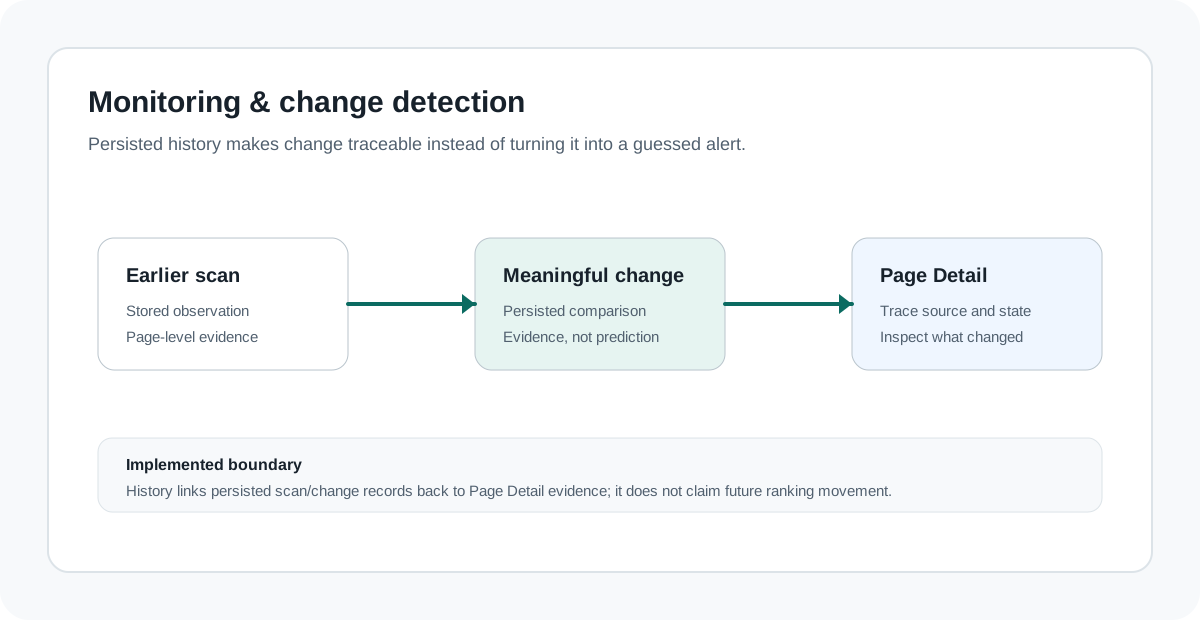
Repeat scans and persisted change events help separate intended changes from unexpected regressions. VeriCrawl keeps the Project, affected pages and later verification connected.
Monitor evidence, not vanity activity
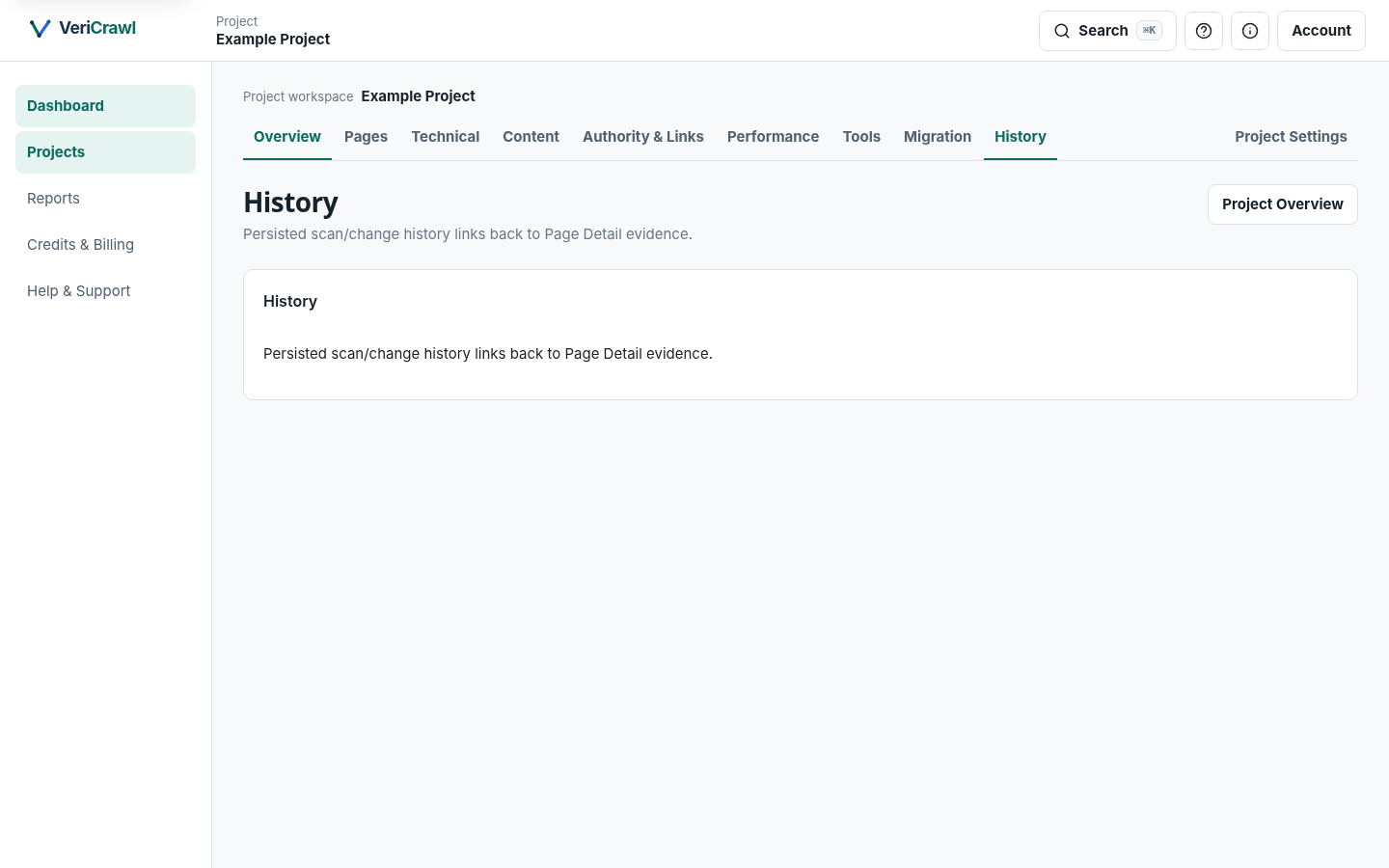
Scan history
Keep durable scan lifecycle and completion evidence attached to the Project.
Meaningful changes
Review persisted change events instead of assuming any timestamp difference is important.
Affected pages
Move from a change or issue into Page Detail when a concrete URL relationship exists.
Verification
Use a later scan to confirm whether fixes remain present and new regressions appeared.
Clear evidence boundaries
No fake real-time monitoring
The product only reports scheduled or executed evidence that actually exists.
No external provider inference
Search Console or authority evidence remains separate until its provider is configured and synced.
No ranking guarantee
Change evidence supports diagnosis and verification; it does not guarantee search visibility.
Create a history you can investigate later.
Start a Project and keep future scans, changes and evidence in one operating context.
Product evidence
See the implemented workflow
Visuals are tied to implemented VeriCrawl screens or workflows. Example fixture values are illustrative and are not customer outcomes.
Direct answer · Entity: VeriCrawl
What does VeriCrawl monitor between scans?
Repeat scans can preserve comparable page and issue evidence so meaningful technical changes can be reviewed over time. Change detection describes stored observations; it does not infer search-engine impact or traffic movement without separate evidence.
Evidence & provenance
Answer is limited to implemented VeriCrawl capabilities, governed content and stored evidence. Search-engine or AI-system visibility is external and is not inferred.